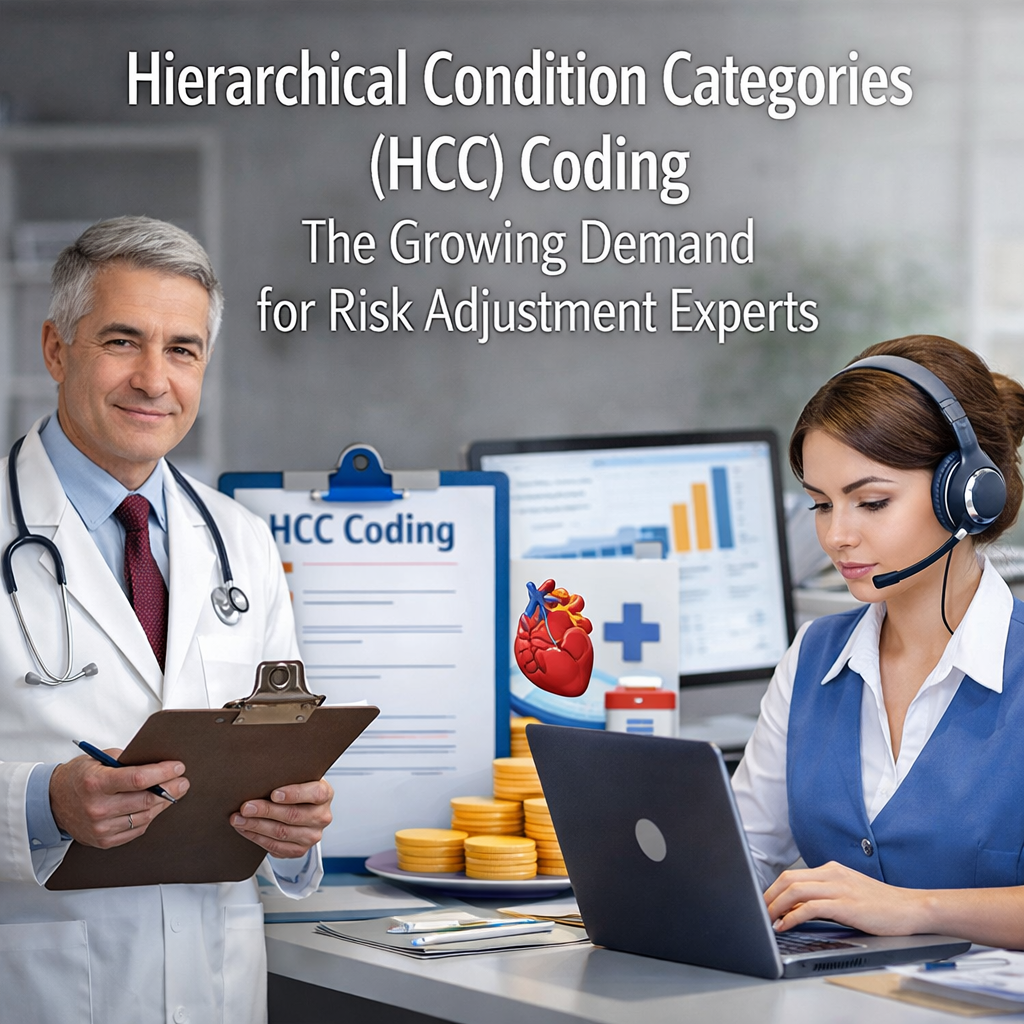
The increasing complexity of healthcare has intensified the need for experts in Hierarchical Condition Categories (HCC) coding. Accurate HCC coding is essential for effective risk adjustment, influencing reimbursement and patient outcomes. To bridge the current skills gap and meet industry standards, aspiring professionals often enroll in a top medical coding institute to gain foundational and advanced expertise. However, challenges like coding guideline complexity and inadequate training persist. Professionals in this field must possess strong coding skills and an understanding of healthcare regulations. The future promises advancements in technology, further increasing the demand for skilled individuals.
Understanding Hierarchical Condition Categories (HCC) Coding
Although many healthcare professionals recognize the importance of accurate coding, understanding Hierarchical Condition Categories (HCC) coding remains essential for effective risk adjustment in patient populations. HCC coding serves as a systematic approach to categorize patient diagnoses, enabling healthcare providers to assess risk profiles accurately. This innovative framework facilitates the alignment of healthcare resources with patient needs, ultimately improving care delivery. By classifying patients based on their health conditions, HCC coding enhances predictive modeling and risk stratification, leading to optimized financial planning and resource allocation. Moreover, as value-based care models continue to evolve, the need for proficient HCC coding becomes increasingly critical.
The Importance of Accurate HCC Coding in Value-Based Care
Accurate HCC coding plays an essential role in the success of value-based care initiatives. It directly influences the financial viability of healthcare organizations by ensuring appropriate reimbursement aligned with patient complexity and risk profiles. By capturing a thorough picture of patient health, HCC coding enables providers to deliver targeted interventions, ultimately improving patient outcomes. In addition, precise coding fosters accountability, driving healthcare systems to innovate and enhance care delivery. As reimbursement models evolve, the demand for skilled professionals adept in HCC coding becomes paramount; these experts are essential in maneuvering the intricacies of risk adjustment.
Common Challenges in HCC Coding
Numerous challenges can hinder the effectiveness of HCC coding, impacting both accuracy and compliance. One significant issue is the complexity of coding guidelines, which can lead to misinterpretation and inconsistent application among coders. To overcome these hurdles, specialized hcc coding training courses are becoming a necessity for teams to ensure they are up-to-date with the latest hierarchical condition category logic. Moreover, inadequate training and knowledge gaps in coding practices can result in errors that compromise data quality. The frequent updates to coding rules and regulations necessitate continuous education, posing an additional burden on healthcare providers. Additionally, insufficient collaboration between clinical staff and coding professionals often leads to incomplete documentation, ultimately affecting risk adjustment outcomes.
Skills and Qualifications of Risk Adjustment Experts
The effectiveness of HCC coding relies heavily on the expertise of risk adjustment professionals, who must possess a unique set of skills and qualifications to navigate the complexities of the field. Proficiency in medical coding, particularly within HCC frameworks, is essential, enabling professionals to accurately translate clinical data into risk-adjusted models. Additionally, a strong understanding of healthcare regulations and reimbursement methodologies is critical for compliance and maximizing financial outcomes. Effective communication skills facilitate collaboration with clinical teams and stakeholders, fostering a cohesive approach to patient management. Moreover, analytical capabilities are significant for interpreting data trends and identifying improvement opportunities.
The Future of HCC Coding and Demand for Professionals
As the healthcare landscape continues to evolve, the future of HCC coding is poised for significant transformation, driven by advancements in technology and a growing emphasis on value-based care. The integration of artificial intelligence and machine learning is expected to enhance accuracy in coding, streamlining processes and reducing human error. To stay competitive in this high-tech environment, obtaining professional credentials through CPC certification training is highly recommended for those looking to validate their expertise in physician-based coding. Additionally, as healthcare systems shift towards outcomes-based reimbursement models, the demand for skilled professionals who can navigate these complexities will soar.
Frequently Asked Questions
What Is the History Behind HCC Coding?
The history of HCC coding dates back to the early 2000s, when the Centers for Medicare and Medicaid Services (CMS) implemented it to enhance risk adjustment in payment models. Initially designed to improve the accuracy of reimbursements, HCC coding evolved to better reflect patient health status. Over time, it became integral to value-based care, driving innovations in healthcare analytics and payment structures, while influencing the broader landscape of healthcare reimbursement methodologies.
How Does HCC Coding Impact Reimbursement Rates?
The impact of coding on reimbursement rates is significant, as it determines the financial compensation for healthcare providers based on patient risk profiles. Accurate coding reflects the complexity and severity of patient conditions, directly influencing funding levels. As reimbursement models evolve towards value-based care, the precision in coding becomes essential for ensuring adequate compensation and resource allocation. Consequently, providers must adapt to these changes to optimize their financial sustainability.
What Software Tools Are Commonly Used for HCC Coding?
In the domain of healthcare coding, various software tools are employed to enhance efficiency and accuracy. Popular options include 3M’s CodeFinder, Optum360’s EncoderPro.com, and Cerner’s PowerChart. These tools utilize advanced algorithms and user-friendly interfaces to streamline the coding process, ensuring that healthcare providers can effectively capture and report patient conditions. The integration of artificial intelligence further enables predictive analytics, transforming how coding professionals manage risk adjustment.
Are There Certifications Available for HCC Coding Professionals?
In the domain of healthcare coding, several certifications are available for professionals seeking to enhance their expertise. Particularly, the Certified Risk Adjustment Coder (CRC) and the Certified Professional Coder (CPC) are prominent options, offering credentials that validate knowledge and skills. These certifications not only bolster professional credibility but also align with the industry’s push for accuracy and innovation in coding practices, ultimately improving patient care and health outcomes.
How Often Should HCC Codes Be Reviewed or Updated?
The frequency of reviewing or updating coding systems is essential for maintaining accuracy and compliance. Industry experts recommend conducting reviews at least annually, though quarterly assessments may be beneficial for organizations aiming for innovation. Regular updates guarantee alignment with evolving healthcare regulations and improve data integrity. By adopting a proactive approach, professionals can enhance risk adjustment strategies and better meet the needs of patients and payers in a dynamic healthcare landscape.