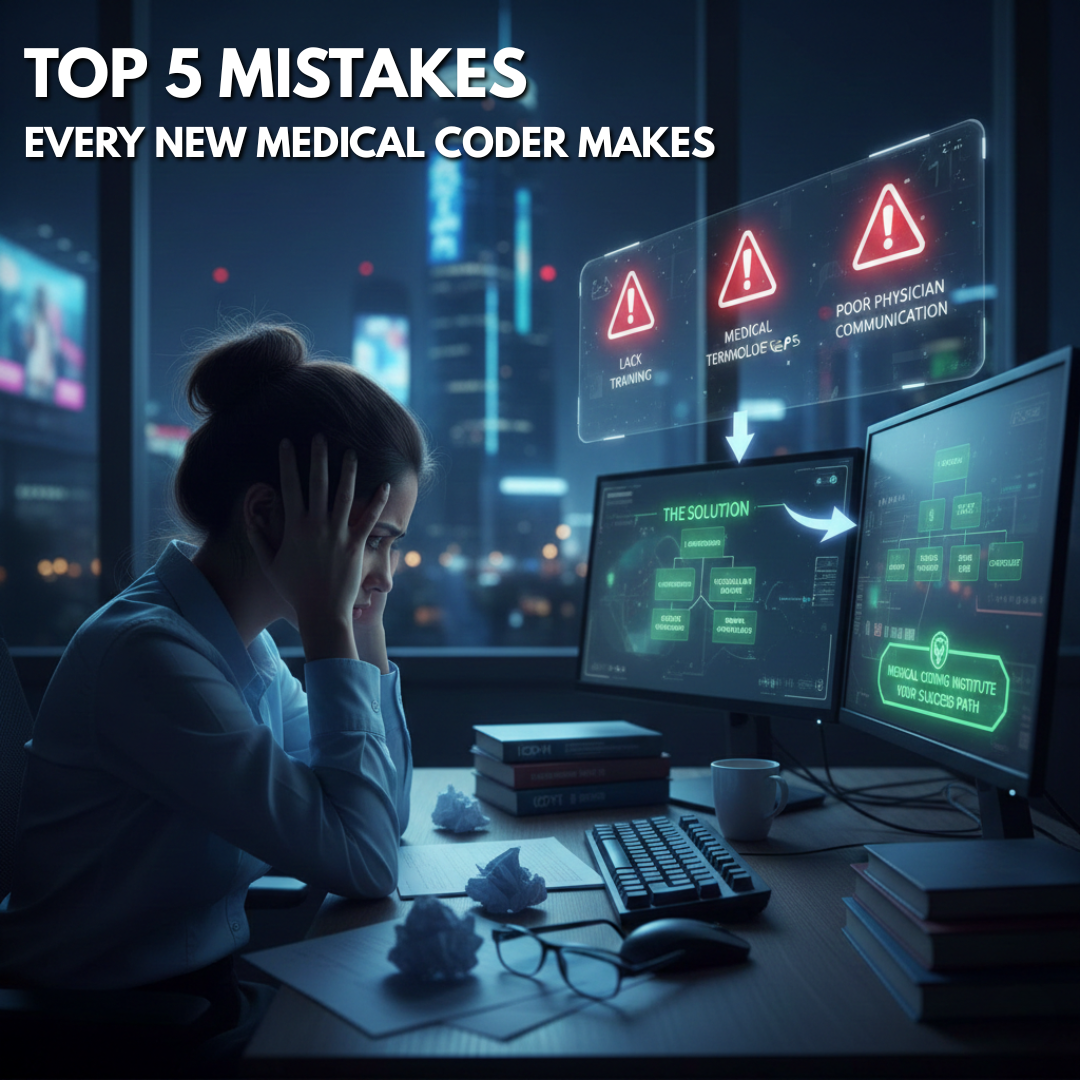
New medical coders often face several pitfalls that can impact their success. These include lack of proper training and certification, inadequate understanding of medical terminology, neglecting to keep up with coding updates, failing to communicate effectively with healthcare providers, and ignoring attention to detail. Each mistake can lead to coding errors, claim denials, and compromised patient care. Learning how to avoid these mistakes is crucial for building a robust career in medical coding. To build a strong foundation, many professionals start their journey at an institute for medical coding, which provide the structured environment necessary to master these complex skills.
Lack of Proper Training and Certification
A lack of proper training and certification can greatly hinder the effectiveness of new medical coders. Without a solid foundation in coding principles and practices, they may struggle to navigate the complexities of healthcare documentation. This deficiency often leads to increased errors, which can compromise patient care and financial outcomes for healthcare providers. Additionally, new coders without certification may find it challenging to gain the trust of employers and colleagues.
The rapidly evolving landscape of medical coding demands ongoing education and proficiency in the latest regulations and technologies. By investing in thorough training programs and obtaining relevant certifications, new coders can enhance their skill sets and boost their confidence. For those specifically looking to excel in the outpatient setting, enrolling in Medical Coding CPC Training is a vital step toward proving professional competence and ensuring long-term career growth.
Inadequate Understanding of Medical Terminology
Medical terminology serves as the foundation for effective medical coding, and an inadequate understanding of it can considerably impede a coder’s performance. New medical coders often struggle with the complexity of terms, abbreviations, and anatomical references, leading to errors that can disrupt the coding process. This lack of comprehension not only affects coding accuracy but can also result in delayed reimbursements and compliance issues. To innovate and excel, coders must invest time in mastering medical language, including common prefixes, suffixes, and root words. Engaging in continuous learning through workshops and online resources can enhance their proficiency.
Neglecting to Keep up With Coding Updates
Keeping abreast of coding updates is essential for new medical coders aiming to maintain accuracy in their work. The medical coding landscape is ever-evolving, with frequent updates to coding systems such as ICD-10, CPT, and HCPCS. Neglecting these changes can lead to errors, claim denials, and ultimately financial losses for healthcare providers.
Innovative coders utilize resources like webinars, professional organizations, and online forums to stay informed about the latest coding revisions and guidelines. For those working in hospital settings, advanced CCS training can be particularly beneficial, as it focuses on the complex documentation required for inpatient coding and the specific updates relevant to facility billing. By proactively engaging with ongoing education, coders not only enhance their skill set but also contribute to improved patient care through precise coding.
Failing to Communicate Effectively With Healthcare Providers
Effective communication with healthcare providers is crucial for new medical coders to guarantee accurate coding and billing processes. Misunderstandings can lead to coding errors, which may result in delayed reimbursements or compliance issues. New coders often fail to ask clarifying questions or seek additional information, relying solely on documentation that may be incomplete or ambiguous. Emphasizing proactive dialogue fosters a collaborative environment, allowing coders to fully understand the clinical context. By establishing open lines of communication, coders can confirm that they capture the nuances of patient encounters accurately.
Ignoring the Importance of Attention to Detail
Attention to detail plays a pivotal role in the success of medical coding, yet many new coders overlook its significance. Precision in coding directly impacts reimbursement accuracy, compliance, and patient care quality. New coders often hastily assign codes without thoroughly reviewing documentation, leading to errors that can result in costly audits or denials. Additionally, overlooking subtle nuances in medical terminology can compromise the integrity of coded data. To cultivate an innovative mindset, aspiring coders should prioritize meticulousness by developing systematic review processes and utilizing coding resources effectively.
Frequently Asked Questions
- What Resources Are Best for Studying Medical Coding?
Online courses, such as those offered by accredited institutions, provide structured learning. Additionally, interactive coding software and mobile applications facilitate practical experience. Utilizing coding books and manuals also guarantees a thorough grasp of essential guidelines and updates in the field.
- How Can I Gain Practical Experience in Medical Coding?
One effective method is securing internships or volunteer positions in healthcare settings. Networking with professionals in the field can also provide mentorship opportunities. Additionally, utilizing online coding simulations or participating in coding boot camps can build the hands-on expertise essential for career advancement.
- What Are the Best Certification Programs for New Coders?
Individuals should explore options like the American Academy of Professional Coders (AAPC) and the American Health Information Management Association (AHIMA). Both organizations offer reputable certifications, such as the Certified Professional Coder (CPC) and Certified Coding Associate (CCA).
- How Often Should I Review Coding Guidelines?
Experts recommend conducting reviews at least quarterly to stay updated with changes in regulations and coding standards. By consistently revisiting guidelines, coders can enhance their skills and minimize errors.
- What Tools Can Help Improve My Coding Accuracy?
Advanced coding software, equipped with artificial intelligence, assists in automating the process and reducing errors. Online coding resources and databases offer updated guidelines for quick access, while peer collaboration platforms enable coders to share best practices.