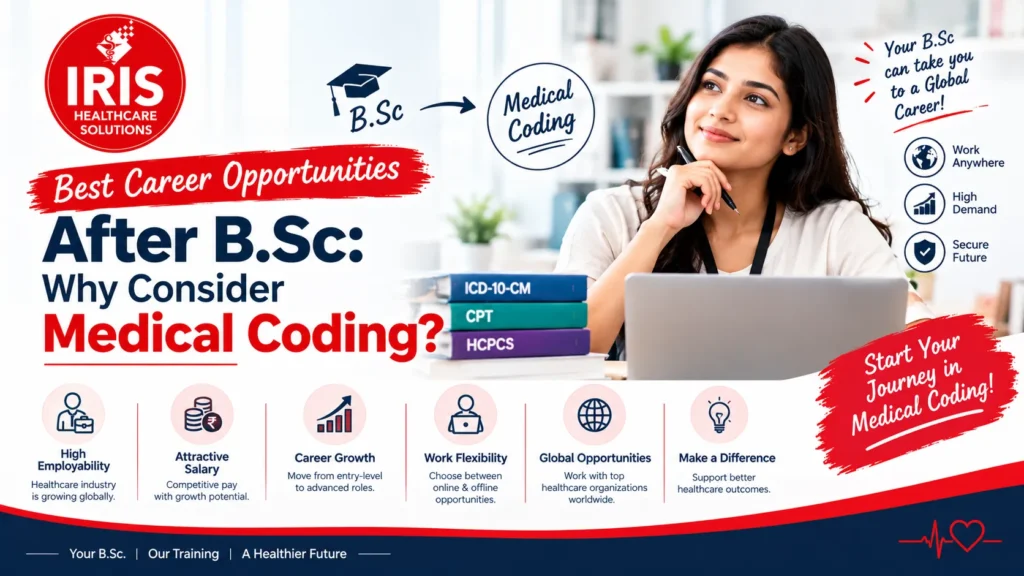
Best Career Opportunities After B.Sc: Why Consider Medical Coding?
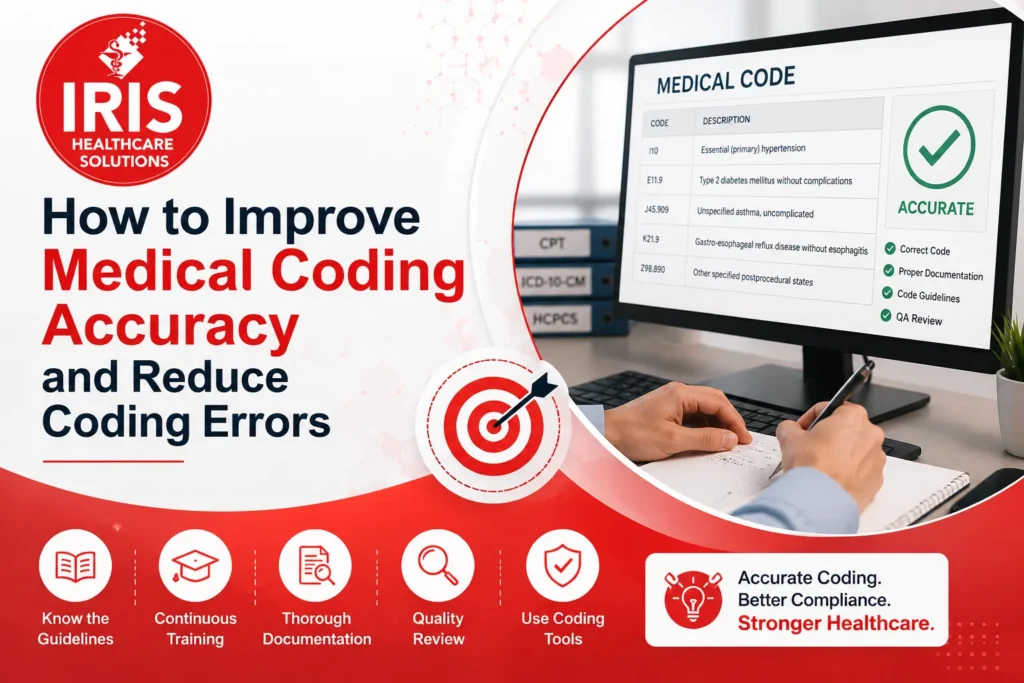
Best Career Opportunities After B.Sc: Why Consider Medical Coding? Have you completed your B.Sc. and started wondering what comes next? You might be exploring higher studies, preparing for competitive exams, searching for private-sector jobs, or looking for a career that offers opportunities to learn and grow. With so many options available, choosing the right direction can feel confusing. If you want to enter the healthcare industry without working directly in patient care, medical coding could be a career option worth exploring in 2026. Medical coding combines healthcare knowledge, medical terminology, documentation, and analytical skills. It can be particularly interesting for graduates from life science and related backgrounds who want to use their academic knowledge in a professional environment. For students searching for the best medical coding training institute in Hyderabad, understanding the career, eligibility requirements, job opportunities, and training process is a useful first step. At IRIS Healthcare Solutions, aspiring medical coders can explore the fundamentals of medical coding and prepare to develop the knowledge needed for this specialized field. What Can You Do After B.Sc.? A B.Sc. degree can open the door to several career paths, depending on your specialization, interests, and further qualifications. Some graduates choose postgraduate education, while others prefer to start working and gain practical experience. Here are a few options you can consider after B.Sc.: Higher education, such as M.Sc. or other relevant postgraduate programs Laboratory and research-related roles, depending on qualifications Clinical research and clinical data-related careers Pharmaceutical and healthcare support roles Quality control and related positions, depending on your subject Medical coding and healthcare revenue cycle roles Competitive examinations and government job opportunities Healthcare administration and documentation-related work The right option depends on what you enjoy, what you studied, and the skills you want to develop. If you are interested in healthcare but prefer a non-clinical role, medical coding is one career path you can investigate before making a decision. What Is Medical Coding? Medical coding is the process of translating information from healthcare records into standardized codes. When a patient visits a hospital or clinic, healthcare professionals document the patient’s symptoms, diagnoses, treatments, and procedures. Medical coders review this documentation and assign appropriate codes according to established coding systems and guidelines. Three important coding systems include: ICD-10-CM: Used for diagnosis coding in applicable healthcare settings. CPT: Used to represent medical procedures and professional services. HCPCS Level II: Used for certain healthcare products, supplies, services, and other items. Medical coding supports healthcare administration, claims processing, reporting, and other revenue cycle activities. However, it is not simply about memorizing codes. A medical coder must understand medical terminology, anatomy, clinical documentation, and coding guidelines to work accurately. Why Is Medical Coding Worth Considering After B.Sc.? 1. You Can Use Your Science Background If you studied biology, biotechnology, microbiology, zoology, botany, or another life science subject, you may already have some familiarity with biological concepts. This knowledge can help when learning anatomy, physiology, medical terminology, and disease processes. You will still need to study medical coding systems and guidelines, but your science background may provide a useful starting point. For graduates who want to apply their academic knowledge in a different professional setting, medical coding can be an interesting option. 2. You Can Enter a Non-Clinical Healthcare Career Not everyone who wants to work in healthcare wants to become a doctor, nurse, or clinical practitioner. Medical coding offers a different route into the healthcare ecosystem. Medical coders generally work with medical records, coding references, documentation, and computer systems rather than providing direct patient care. This can appeal to graduates who prefer detail-oriented, computer-based work. 3. You Can Develop a Specialized Skill A degree gives you an academic foundation, but employers also look for skills relevant to the role. Medical coding training introduces you to specialized knowledge such as: Anatomy and physiology Medical terminology ICD-10-CM CPT HCPCS Coding conventions and guidelines Medical documentation Coding accuracy and compliance Developing these skills can help you prepare for entry-level opportunities, subject to employer requirements. 4. There Are Different Areas to Explore Medical coding is not limited to one type of role. Depending on your training and experience, you may explore diagnosis coding, outpatient coding, inpatient coding, or specialty areas. With further learning and relevant experience, some professionals move into quality analysis, auditing, training, or other healthcare revenue cycle roles. Career progression is not automatic, but building strong fundamentals gives you a better base from which to explore these opportunities. What Are the Job Opportunities After Medical Coding Training? After completing appropriate training, candidates can look for roles that match their qualifications, coding knowledge, and employer requirements. Medical Coder Medical coders review clinical documentation and assign appropriate diagnosis or procedure codes. Entry-level opportunities may be available to eligible candidates who demonstrate the required skills. CPC-Certified Coder The Certified Professional Coder (CPC) credential is offered by the AAPC. Candidates who meet the applicable requirements can pursue the certification to demonstrate coding knowledge. Certification can support your professional profile, but it does not guarantee employment. Outpatient Medical Coder Outpatient coding involves coding services delivered in outpatient settings. The work requires an understanding of documentation, diagnosis coding, procedure coding where applicable, and relevant guidelines. Inpatient Medical Coder Inpatient coding involves coding hospital inpatient records and may require more advanced knowledge of coding conventions, documentation, and applicable inpatient coding rules. The qualifications and experience expected for these roles can vary. Medical Coding Quality Analyst With relevant experience, some coders explore quality-focused positions that involve reviewing coding accuracy, identifying errors, and supporting compliance with coding requirements. Medical Coding Auditor or Trainer Experienced professionals may also consider auditing or training roles. These typically require strong coding knowledge, practical experience, and the ability to explain coding decisions clearly. Is Medical Coding Suitable for Every B.Sc. Graduate? Medical coding may be suitable for graduates who enjoy healthcare-related subjects, working with information, and following detailed rules. However, eligibility differs across employers and training programs. Graduates from life science and healthcare-related disciplines may find their academic background useful. Students from